Climate Scenario Analysis for Infrastructure: From NGFS Scenarios to Asset-Level Financial Impact
How to translate NGFS, IPCC, and IEA climate scenarios into asset-level financial impacts for infrastructure portfolios. A five-step methodology for investors.
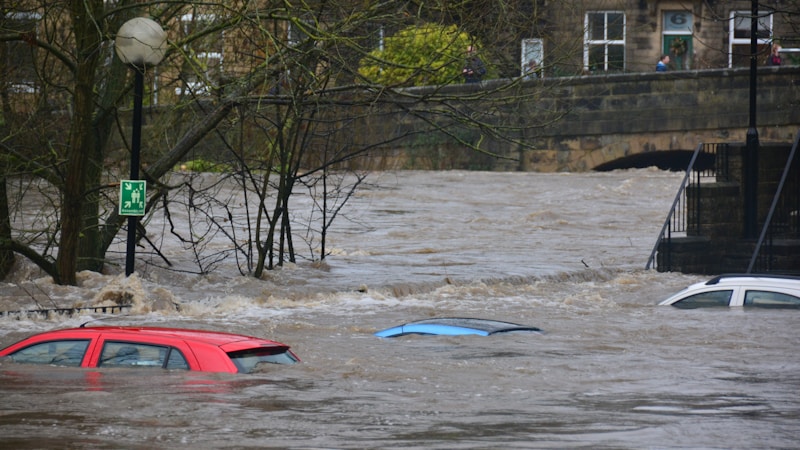
Climate scenario analysis for infrastructure is the process of modelling how different climate pathways affect the financial performance of physical assets over their operational lifetimes. It translates global scenarios from frameworks like NGFS and IPCC into asset-level revenue impacts, CapEx acceleration, and valuation adjustments.
Why Infrastructure Investors Cannot Ignore Climate Scenario Analysis
Three forces are converging to make climate scenario analysis unavoidable for infrastructure funds.
Regulatory requirements are hardening. IFRS S2 raises the expectation that climate disclosures be financially connected and decision-useful. For infrastructure, this often means stronger linkage to impairment testing, provisions and valuation-related assumptions.
P50 forecasts are failing. Without scenario analysis accounting for forward-looking climate projections, there is no way to determine whether performance shortfalls are temporary or structural shifts.
Insurance markets are repricing ahead of investors. Insurers already run climate scenario models and adjust premiums accordingly, creating information asymmetries for asset owners lacking equivalent analysis.
What is Climate Scenario Analysis?
Climate scenario analysis is a structured method for exploring how different plausible climate futures affect the financial performance of assets and portfolios. Scenarios are not predictions - they are internally consistent narratives about how climate, policy, technology, and markets might evolve together.
For infrastructure, scenarios must account for hyperlocal physical risk projections, engineering-specific damage thresholds, and asset lifespans extending well beyond typical corporate planning horizons.
Climate scenarios split into two categories: physical risk scenarios (how changing weather patterns affect asset performance and integrity) and transition risk scenarios (how policy, technology, and market shifts affect asset economics).
Choosing the Right Scenario Framework
Three major scenario frameworks dominate climate risk analysis for financial institutions.
NGFS Scenarios: The Financial Sector Standard
The Network for Greening the Financial System publishes six scenario pathways organised around climate policy ambition and transition orderliness: Orderly, Disorderly, and Hot House World.
NGFS scenarios are the default choice for regulatory compliance and portfolio-level stress testing. Their limitation is resolution - they operate at macroeconomic level and do not directly model specific asset impacts.
IPCC SSP-RCP Framework: The Climate Science Standard
The IPCC’s Shared Socioeconomic Pathways paired with Representative Concentration Pathways provide the most granular physical climate projections available. SSP1-2.6 represents a sustainability-focused pathway. SSP5-8.5 represents fossil-fuelled development.
For infrastructure, the SSP-RCP framework offers higher physical resolution than NGFS, making it the preferred framework for asset-level physical risk analysis.
IEA Scenarios: The Energy Transition Standard
The International Energy Agency publishes core scenarios including Net Zero Emissions by 2050 (NZE), the Announced Pledges Scenario (APS), and the Stated Policies Scenario (STEPS).
For energy-focused infrastructure investors, IEA scenarios model how energy transition changes demand for and economics of specific infrastructure types.
Which Framework Should You Use?
Most infrastructure funds need a combination:
- NGFS for macro framing and regulatory compliance
- IPCC SSP-RCP for asset-level physical risk
- IEA for energy transition assumptions
How to Run Climate Scenario Analysis for Infrastructure: A Five-Step Process
Step 1: Define Scope and Calibrate Time Horizons
Start with the investment thesis, not the climate model. Scope should be defined by financial materiality.
Time horizons must map to actual investment decision points:
- 1 to 5 years: Current hold period and operational budget cycle
- 5 to 15 years: Refinancing events, regulatory review cycles, and exit windows
- 15 to 40+ years: Full concession or asset life
Step 2: Select and Weight Scenarios
A practical scenario set for infrastructure includes four pathways:
- Orderly transition (NGFS Net Zero 2050 / SSP1-2.6): Early, gradual policy action
- Disorderly transition (NGFS Delayed Transition / SSP2-4.5): Late, abrupt policy action
- Current policies (NGFS Current Policies / SSP3-7.0): No additional climate action
- High physical risk (NGFS Hot House World / SSP5-8.5): Failed transition with severe consequences
Present scenario results as unweighted ranges for strategic discussions, but use probability-weighted expected values when adjusting DCF models.
Step 3: Translate Scenarios to Asset-Level Physical Impacts
Global temperature pathways do not tell you what happens to specific assets. The translation requires three layers:
Layer 1: Downscale global projections to local climate. Regional climate models translate global projections into resolutions relevant to individual assets.
Layer 2: Map projections against engineering thresholds. Climate projections become financially meaningful only when they cross operating tolerances of specific equipment. For example, solar inverters begin thermal derating above 45 degrees Celsius.
Layer 3: Account for compounding degradation. Equipment degrades faster under heat stress, and forward-looking resource changes must layer on top of equipment-specific degradation curves.
Step 4: Quantify Financial Impact Across Scenarios
Physical impacts become decision-relevant when expressed in financial terms. For each scenario, the financial translation should cover five channels:
- Revenue loss from reduced generation or availability
- CapEx acceleration from earlier equipment replacement
- OpEx drift from increased maintenance and cooling costs
- Insurance repricing as carriers adjust premiums
- Exit valuation adjustment as buyers factor physical risk into pricing
Scenario-adjusted yield projections feed into DCF models’ revenue lines. Scenario-adjusted maintenance schedules feed into CapEx and OpEx. The output is scenario-conditioned IRRs.
Step 5: Aggregate to Portfolio Level and Stress Test
Individual asset scenarios must roll up to portfolio-level outcomes. Portfolio stress testing should answer:
- What is the portfolio-level IRR under this pathway?
- Which assets contribute most to downside risk?
- What concentration thresholds are breached?
From Scenarios to Decisions: Closing the Operationalization Gap
Breaking the accountability gap requires embedding scenario outputs at three specific decision points.
Pre-deal: Scenario-adjusted bid pricing. Climate scenario analysis should inform the price an investor is willing to pay. Presenting scenario-conditioned valuations forces the fund to make climate assumptions explicit.
Hold period: Dynamic scenario monitoring. As new climate data arrives, the active scenario set should be updated. Triggers for reassessment include actual yields deviating from projections beyond defined thresholds, insurance premium increases, or new regulatory requirements.
Exit: Scenario-disclosed valuations. Transparent, scenario-conditioned valuations with explicit assumptions become a competitive advantage in transactions.
Reverse scenario testing offers additional rigour: ask what would have to change in climate conditions to make the investment thesis fail.
Communicating Scenario Uncertainty to Investment Committees
Present climate scenario analysis as decision support, not prediction. Three elements are effective:
Lead with the valuation spread, not the climate science. Present the IRR range across scenarios first.
Use three charts. Show the base case, the upside scenario, and the downside scenario with quantified impacts.
Frame scenario analysis as decision support. Position it as identifying no-regret investments - actions that improve risk-adjusted returns under any plausible climate future.
Frequently Asked Questions
What is the difference between SSP and RCP scenarios?
RCPs describe greenhouse gas concentration trajectories. SSPs describe socioeconomic conditions, population growth, governance, and technology development. SSP-RCP pairings create labels such as SSP1-2.6 and SSP5-8.5. For infrastructure investors, SSPs influence not just climate projections but the economic context in which assets operate.
How many scenarios should an infrastructure fund run?
At minimum, two: one Paris-aligned pathway and one higher-warming pathway. For thorough decision-making, four scenarios provide a more complete picture.
How often should infrastructure investors update climate scenario analysis?
Annual updates aligned with reporting cycles are the baseline. Event-driven reassessment should be triggered by material changes: significant yield deviations, regulatory shifts, new scenario vintages, or insurance repricing events.
What time horizons should infrastructure funds use?
Align with actual decision cycles: 1 to 5 years (operational), 5 to 15 years (strategic), and 15 to 40+ years (structural).
Can climate scenario analysis be automated?
Partially. The physical climate projection layer is suited to automation. The financial translation layer requires asset-specific engineering data and financial model integration. The strategic interpretation layer remains a human judgement call.
What changed in NGFS Phase V damage functions?
The Phase V scenarios introduced a new damage function producing global losses two to four times higher than previous versions. By 2050, loss projections under Current Policies increased from roughly 5% to 15% of GDP. For infrastructure investors, scenario analysis run on Phase IV assumptions materially understates physical risk.
The climate data your financial models are missing.
Get climate intelligence on your portfolio - in 48 hours.
Get Your Climate Assessment