Climate-proof your grid infrastructure.
TSOs and DSOs use Repath to understand where climate stress will hit their network - and where adaptation investment prevents the most outages.






Extreme weather events are outpacing grid resilience planning.
"Historical weather data is obsolete; future extremes exceed original design specs."
Germany and Belgium face SAIDI increases of 9% by 2030. Spain and Hungary: heat outages triple by 2050.
"We can't justify resilience CapEx to regulators without quantified evidence."
Regulators want forward-looking climate risk data - not historical extrapolations. Without it, your adaptation budget request lacks the evidence base.
"We focus on 1-in-100-year catastrophes but bleed cash on the 1-in-5-year reality."
Chronic, frequent events cause the most cumulative damage. Targeted hardening reduces fault rates by -21% - but only if you know where to invest.
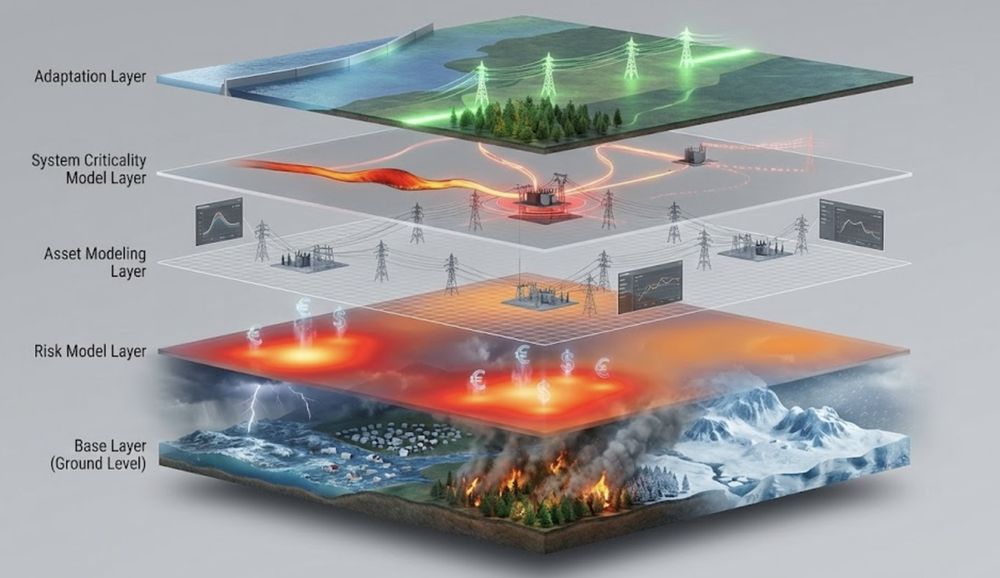
Five layers of intelligence: from ground-level hazards to adaptation strategy.
The outage numbers regulators will ask about.
DE/BE SAIDI by 2030
1.5 min additional outage per customer per year
ES/HU heat outages
Heat-related outages triple by 2050
Fault rate reduction
Through targeted hardening of critical segments
€1.26B Portfolio · 18 Substations · 58,850 km Lines
Climate intelligence for grid planning and adaptation.
Network climate stress mapping
Identify which substations, lines, and transformers face the highest climate exposure. By hazard type, severity, and timeline.
Outage risk quantification
Translate climate hazards into expected outage hours and SAIDI impact. From flooding to ice load to heat-induced capacity loss.
Adaptation investment planning
Cost-benefit analysis for hardening measures. Which investments in resilience deliver the most reliability per EUR spent? Evidence for your regulator.
Regulatory-ready documentation
Climate resilience assessments that meet evolving regulatory requirements. Forward-looking, IPCC-grade science. Ready for submission.
Infrastructure is not equities
Generic ESG and equity climate tools don't understand infrastructure-specific metrics like SAIDI, availability payments, or concession revenues. Repath is built from the ground up for physical infrastructure - the hazards, the financial structures, and the regulatory frameworks that govern them.
Sound familiar?
"Your regulator wants forward-looking climate evidence for your next rate case."
RIIO-T3, ED3, or equivalent: regulators want IPCC-grade climate data to justify resilience CapEx. Repath delivers the evidence base they expect.
"Your SAIDI numbers are trending upward and you can't prove it's climate-driven."
We quantify the weather-climate contribution to outage hours. 7% of faults cause 30% of customer hours lost - targeted hardening cuts fault rates by 21%.
"You have 500 substations and need to prioritise which ones to flood-proof first."
Repath ranks every asset by climate exposure and adaptation ROI. Know which £250k investment prevents £5M in cascading failures.
"Your N-1 contingency planning assumes historical weather patterns that no longer hold."
Overlay forward-looking climate hazard probabilities onto contingency scenarios. Identify systemic bottlenecks before they cause cascading failures.
"The only forward-looking climate tool I've come across for generation loss from extreme heat."
- Senior Executive, European Infrastructure Fund
Map climate risk across your network.
See where your grid is most exposed - and where adaptation investment pays back. Results in 48 hours.
48h to DCF-ready results · Any asset class · Any format