Infrastructure Investment: The Climate Blindspot Behind Missing 8-10% IRR Targets
Why bottom-quartile infrastructure funds are posting negative returns while top-quartile funds clear 12%+ IRR, and the unpriced climate variable that explains the gap.
Private infrastructure assets under management have exploded from $500 billion in 2016 to $1.5 trillion in 2024, yet bottom-quartile infrastructure funds are delivering negative returns. While conventional explanations account for some performance variance, a critical gap exists: climate risk remains unmodeled in most financial projections, explaining why actual returns consistently underperform underwriting assumptions.
Current Performance Landscape
Cambridge Associates’ analysis of 120+ developed-market infrastructure funds reveals stark dispersion. Top-quartile performers deliver 12%+ IRR while bottom-quartile 2023-vintage funds sit in negative territory. The median sits at 9.8%, masking enormous variation. Digital infrastructure specialists achieved 14.0% median returns, traditional power specialists 14.1%, while diversified generalist funds lagged at 9.6%.
Renewable energy shows particular compression - pre-2020 projects delivered 10-15% IRR; current projects generate 5-8%. This gap extends beyond power price declines and construction cost increases, affecting even operational assets underwritten at higher returns.
The Climate Variable Absent from Models
Critical finding: 66% of investors acknowledge climate as material yet conducted zero quantitative evaluations of its return impact, according to EDHEC Business School research. Climate risk receives qualitative treatment while remaining absent from DCF models.
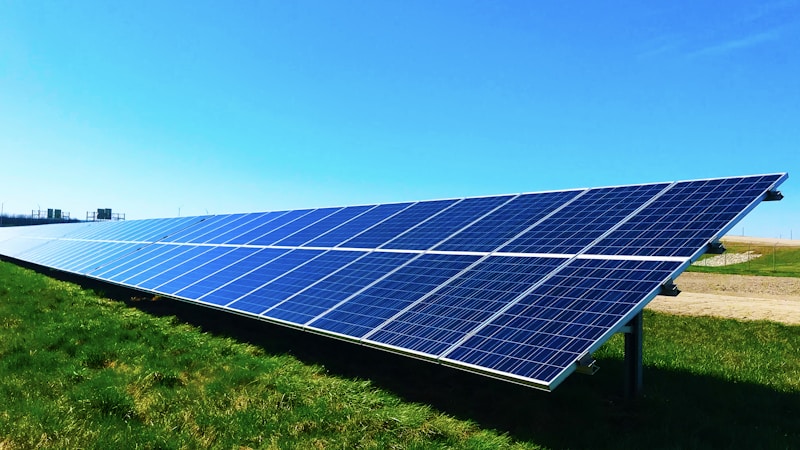
Standard degradation assumptions fail field reality. Solar assets underperform expectations by approximately 5%; wind assets by 5-10%. The cause isn’t catastrophic events but chronic yield erosion - sustained heat degrading inverter efficiency, shifting wind patterns, and equipment operating outside design parameters.
Five Return-Erosion Channels
1. Chronic Yield Erosion: Small annual drags from heat and wind pattern shifts compound into material IRR erosion across hold periods.
2. CapEx Acceleration: Extreme weather brings forward maintenance cycles, replacing year-12 Capex with year-4 expenditures, invalidating acquisition-price assumptions.
3. OpEx Drift: Insurance premiums rise 18-30% annually; baseline maintenance costs climb; natural disaster losses reached $368 billion in 2024 with 60% uninsured.
4. P10-P90 Probability Spread: Most models use single-point P50 projections. The P10-P90 range reveals 3-4% lifetime degradation spreads - the entire margin between clearing 8% hurdles and negative returns.
5. Exit Multiple Compression: Buyers increasingly demand quantified climate resilience data, applying haircuts to assets lacking it.
Climate-Aware Infrastructure Success
Battery storage exemplifies climate-smart execution. Central and Eastern European standalone systems deliver 15-19% IRR from day-ahead trading alone. Battery costs fell 40% in 2024 to $150/kWh. Global deployment hit 63 GW in 2024.
Sector specialists consistently outperform generalists. Cambridge Associates data shows domain-specific funds with granular asset-level knowledge outpace portfolio-level assumption models. The World Bank estimates $4 returned for every $1 invested in infrastructure adaptation, while a WRI study across 320 investments documented $10+ returned per $1.
Due Diligence Framework
Climate-adjusted analysis moves beyond qualitative flags to quantify hazard impacts within investor hold periods (years 3-7). Key elements include:
- Hold-period modeling: Climate effects relevant to 7-10 year holds differ from 30-year concessions
- Engineering thresholds: Asset-specific ratings (wind load, thermal cutoffs) replace portfolio averages
- Adaptation ROI: Quantified costs and breakeven timelines for interventions
- Climate-adjusted projections: P10-P90 yield ranges accounting for temperature, precipitation, and extreme weather scenarios
- Pricing integration: Revised CapEx schedules, OpEx curves, and exit multiples reflecting realistic climate trajectories
European Market Reality
Europe absorbed EUR 822 billion in cumulative climate damages since 1980 (25% occurring in past four years). PV capture rates dropped below 60% across major markets: Germany at 52%, Spain at 54%. Germany recorded 724 negative-price hours in 2025, with 24% of PV generation at negative prices. Investors deploying without climate-adjusted yield models price off obsolete assumptions.
The Deployment Challenge
With $461.9 billion targeted by funds currently in market and 8-10% return requirements, every basis point of unmodeled climate drag determines success. The margin between clearing hurdles and missing them has narrowed significantly.
Infrastructure investment fundamentals remain sound - real income, inflation protection, structural demand growth. However, most financial models remain incomplete. Funds outperforming peers share a common characteristic: they’ve quantified the actual cost of climate on acquired assets, pricing what competitors systematically miss.
The climate data your financial models are missing.
Get climate intelligence on your portfolio - in 48 hours.
Get Your Climate Assessment