Understanding Renewable Energy Yield Risk Analysis: Key Strategies
Yield risk represents a fundamental business concern that affects everything from financing costs to long-term asset value.
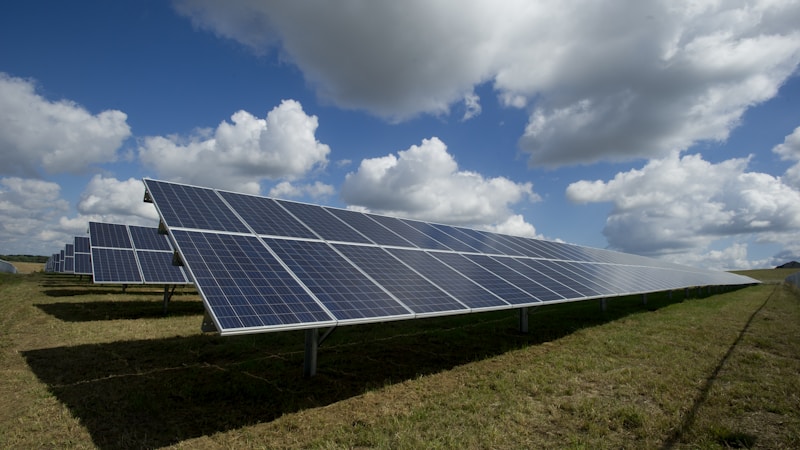
The renewable energy sector faces a critical challenge: bridging ambitious climate goals with complex investment realities. Energy yield risk - the uncertainty between projected and actual generation - directly impacts project viability. Traditional yield assessments typically carry a 5% to 11% uncertainty range, translating to millions in potential revenue variance over project lifetimes.
What is Renewable Energy Yield Risk?
Yield risk encompasses deviations between predicted and actual electricity production across solar, wind, and other renewable assets. Environmental, technical, operational, and market factors all contribute to this uncertainty, necessitating sophisticated analytical approaches beyond simple historical averaging.
Key Impact Factors
Environmental Variability
Weather creates inherent production fluctuations. Solar systems experience cloud cover impacts; wind farms face gusting variability. Research indicates snowy climates can cause up to 15% energy reduction in solar installations, while dust accumulation on solar panels can cause up to 7% of annual energy loss in certain regions.
Technology Performance
Equipment gradually degrades over time. Studies show only 0.05% of solar panels fail annually, though performance degradation typically ranges 0.5-0.8% yearly. Proper system optimization can improve production by 3-4.8%.
Grid Integration
Curtailment risk emerges as renewable penetration increases, with grid infrastructure limitations preventing full energy delivery despite available resources.
Climate Change Implications
Climate shifts undermine traditional yield assessment assumptions. Shifting precipitation patterns, temperature increases affecting panel efficiency (0.3-0.5% loss per degree Celsius), and increasing extreme weather frequency all necessitate forward-looking climate models replacing backward-looking historical data.
Risk Assessment Strategies
Forecasting Methodologies
Advanced tools using digital twins simulate performance across scenarios. Energy yield differences between forecasting approaches range 0.24-2.4%, representing significant financial impacts.
Financial Modelling
Comprehensive models assess feasibility, identify risks, and support investment decisions. Research shows risk premiums and investment risk have declined for solar photovoltaics and onshore wind.
Risk Management
Power Purchase Agreements provide revenue stability. Hedging strategies, equipment guarantees, insurance products, and long-term supply contracts all mitigate different risk categories.
Common Assessment Pitfalls
Organizations often overrely on limited historical data, underestimate degradation rates, neglect local microclimate factors, and fail accounting for curtailment risk. Studies found energy yield predictions in 26 tested solar projects were off by approximately 8%.
Policy and Market Risks
Policy stability significantly influences investment risk; retroactive regulatory changes have historically created substantial losses. Additionally, electricity market volatility - including price cannibalisation from renewable surges - affects merchant projects without fixed-price agreements.
Implementation Best Practices
Continuous monitoring, peer benchmarking, scenario analysis, and documented optimization efforts enhance project value. Building service provider relationships based on performance data strengthens operational effectiveness.
The climate data your financial models are missing.
Get climate intelligence on your portfolio - in 48 hours.
Get Your Climate Assessment